
Meet Mehmet


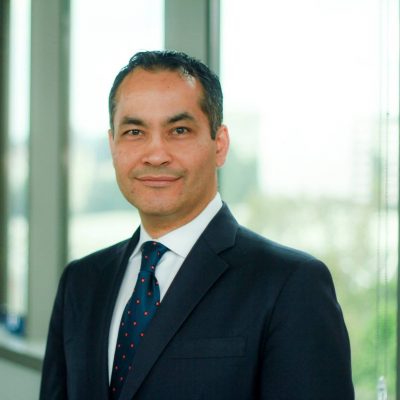
Ali Khademhosseini, CEO

Ali Khademhosseini is the CEO of the Terasaki Instiute. Formerly, Levi Knight Professor of Bioengineering, Chemical Engineering and Radiology at the University of California-Los Angeles (UCLA). He is the Founding Director of the Center for Minimally Invasive Therapeutics at UCLA. In addition, he is an eminent scholar at Konkuk University in Korea.

He joined UCLA starting Nov. 2017 from Harvard University where he was Professor at Harvard Medical School (HMS) and faculty at the Harvard-MIT’s Division of Health Sciences and Technology (HST), Brigham and Women’s Hospital (BWH) and as well as associate faculty at the Wyss Institute for Biologically Inspired Engineering. At Harvard University, he directed the Biomaterials Innovation Research Center (BIRC) a leading initiative in making engineered biomedical materials.

He is a leader in applying bioengineering solutions to precision medicine. His large and interdisciplinary group is interested in developing ‘personalized’ solutions that utilize micro- and nanoscale technologies to enable a range of therapies for organ failure, cardiovascular disease and cancer. In enabling this vision, he works closely with clinicians (including interventional radiologists, cardiologists and surgeons). For example, he has developed numerous techniques in controlling the behavior of patient-derived cells to engineer artificial tissues and cell-based therapies. He is also developing ‘organ-on-a-chip’ systems that aim to mimic human physiology and pathology to enable patient-specific evaluation of drug candidates. In addition, his laboratory is a leader in utilizing biofabrication to form vascularized tissues with appropriate microarchitectures as well as regulating stem cell differentiation in microengineered environments. He has also pioneered various high-performance biomaterials that can respond to each patient’s needs. He has edited multiple books / journal special issues and is an author on >500 peer-reviewed journal articles, editorials and review papers, >60 book chapters/edited books and >20 patent/disclosure applications. His work has been published in leading journals and routinely highlighted in international media. He has been cited >44,000 times and has an H-index of 109. Also, he has given over >250 invited seminars and keynote lectures. Annually for the past four years he has been selected by Thomson Reuters as one of the World’s Most Influential Minds as a Highly Cited Researcher.

Dr. Khademhosseini’s interdisciplinary research has been recognized by over 40 major national and international awards. He is the recipient of the Presidential Early Career Award for Scientists and Engineers (PECASE), the highest honor given by the US government for early career investigators. In 2007, he was named a TR35 recipient by the Technology Review Magazine as one of the world’s top young innovators. In 2011, he received the Pioneers of Miniaturization Prize from the Royal Society of Chemistry (RSC) for his contribution to microscale tissue engineering and microfluidics. In 2016, he received the Sr. Scientist Award of Tissue Engineering and Regenerative Medicine Society-Americas (TERMIS-AM) and in 2017 he received the Clemson Award of the Society for Biomaterials. He is a fellow of the American Institute of Medical and Biological Engineering (AIMBE), Biomedical Engineering Society (BMES), Royal Society of Chemistry (RSC), Biomaterials Science and Engineering (FBSE), Materials Research Society (MRS), NANOSMAT Society, and American Association for the Advancement of Science (AAAS).

Dr. Khademhosseini is highly interested in training students and postdoctoral fellows for which he received the MIT’s Outstanding Undergraduate mentor. Over 40 of his previous trainees have gone to academia as faculty at institutions including Harvard University-Massachusetts General Hospital, Brigham and Women’s Hospital, University of California-Riverside, Arizona State University, Texas A&M University, University of Pittsburgh, INSERM, Northeastern University, Hanyang University, Singapore National University and Tsinghua University.

Dr. Khademhosseini is an Associate Editor for ACS Nano. Previously, he served as the Research Highlights editor for Lab on a Chip. He is on the editorial boards of numerous journals including Small, RSC Advances, Advanced Healthcare Materials, Biomaterials Science, Journal of Tissue Engineering and Regenerative Medicine, Biomacromolecules, Reviews on Biomedical Engineering, Biomedical Materials, Journal of Biomaterials Science-Polymer Edition and Biofabrication. He received his Ph.D. in bioengineering from MIT (2005), and MASc (2001) and BASc (1999) degrees from University of Toronto both in chemical engineering.
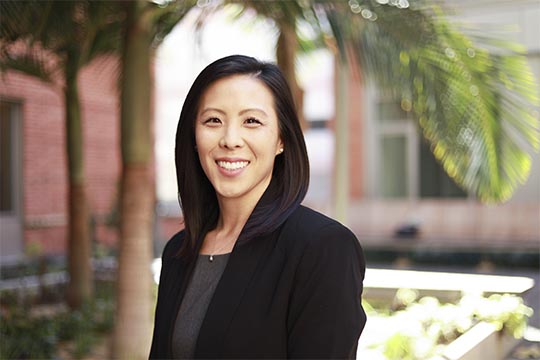
Janet Hiroshima, Director of Development 

Janet Hiroshima is the Director of Development at the Terasaki Institute for Biomedical Innovation where she oversees the organization’s donor relations program and develops strategies to implement and connect individuals who are passionate about enhancing personalized solutions for health care for all. 

Most recently, Janet served as the Director of Annual and Special Gifts at UCLA’s Henry Samueli School of Engineering and Applied Science, where she led the annual giving efforts and was part of a team that raised over $250 million, a component of UCLA’s $4.2 billion Centennial Campaign. While at UCLA Samueli, she also served in roles with the major gifts team and oversaw the stewardship program at the School.

Prior to UCLA Samueli, she was at the Japanese American Cultural and Community Center (JACCC), where she worked on programs and events centered on building community through arts and culture.  She primarily focused on development activities such as managing the donor relations program, special events, annual giving, and membership.

Janet currently serves as a board member for Kizuna, a youth leadership organization, based in Little Tokyo in Los Angeles, California, focused on educating, engaging, and empowering the next generation of leaders in the Japanese American community. She holds a Master’s in Public Administration with a non-profit management certificate from Cal State Northridge and a B.A. in Human Development and a certificate in Gerontology from Cal State Long Beach. 


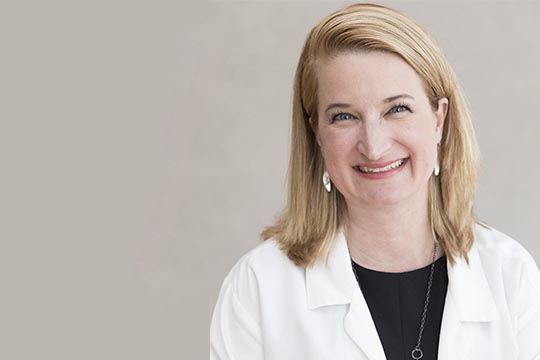
Amy D. Waterman, PhD, Professor in Residence, Deputy Director.

Amy D. Waterman, PhD, is a national transplant innovator and a Professor in Residence at the University of California, Los Angeles in the Division of Nephrology. She is Director of the Transplant Research and Education Center (TREC) and Deputy Director of the Terasaki Institute for Biomedical Innovation (TIBI). In addition to many national transplant leadership positions, Dr. Waterman is a Fellow of the American Society of Transplantation and serves as the Research Committee Chair for the National Kidney Registry. In 2018, she received the ClearMark Award of Distinction from the Center for Plain Language for her interactive digital application, My Transplant Coach, as well as a National Health Information Merit Award for two educational initiatives developed by Explore Transplant, a nonprofit consortium Dr. Waterman founded. In 2016, Dr. Waterman was invited to be the keynote speaker at the White House Organ Donation Summit. In 2019, Dr. Waterman received the American Society of Transplantation 2019 Clinician of Distinction Award. 

Through her research and educational initiatives, Dr. Waterman seeks to 1) understand the critical, modifiable patient, provider, and system barriers to donation and 2) design interventions to overcome them. Dr. Waterman’s research has been supported by over $25 million in federal grants, and she has authored approximately 100 research articles and book chapters. She has designed 13 educational programs to help patients and potential living donors make informed transplant decisions. These programs have been disseminated to patients in hundreds of dialysis and transplant settings in the United States, Canada, and South Africa, in multiple languages.  Dr. Waterman received her PhD in Social Psychology from Washington University, St. Louis, MO.


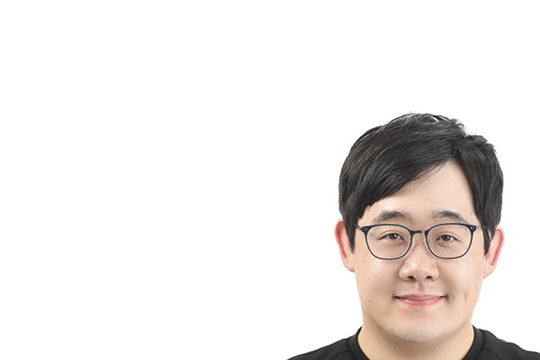
HanJun Kim, Assistant Professor

Dr. HanJun Kim received his D.V.M. from Konkuk University, South Korea in 2012. He then obtained a Ph.D. in Veterinary Pathology from Konkuk University in 2018. During the Ph.D. degree, he studied the long-term implantation of the nerve electrode for the purpose of rehabilitation of a denervated patient. He analyzed long-term biocompatibility studies by implanting various biofunctional material coated electrodes. In 2017, he was selected as a Young Scientist by the Korean Academy of Science and Technology (KAST). And he was also named a Young Scientist at the 68th Lindau Nobel Laureate Meeting in 2018.

As a biomedical researcher, Dr. HanJun Kim analyzed the effects of biomedical technology on implanted hosts using animal models of human disease. Through this effort, he has focused on research that allows newly developed technologies to became “biologically applicable” by analyzing “how” and “why” that affect biological systems. In this process, he has been working with many biomedical researchers to make an impact study. He joined the Khademhosseini lab in August 2018 as a postdoctoral scholar at the California NanoSystems Institute at UCLA. He has been seeking to apply his experience and training in regenerative efficacy and biocompatibility of biomaterials to a new and exciting field in the Khademhosseini lab.


Samad Ahadian, Assistant Professor 

Dr. Samad Ahadian is an Assistant Professor at the Terasaki Institute for Biomedical Innovation. Previously, he was a development engineer at the Department of Bioengineering, UCLA. He has done extensive research on skeletal muscle tissue engineering, cardiac tissue regeneration, nanobiomaterials, hydrogels, and antimicrobial materials. He received his Ph.D. in materials science from Tohoku University (Japan). He worked as a Postdoctoral Research Associate and then an Assistant Professor at Tohoku University. Following that, he held positions as a Research Fellow at the University of Toronto (Canada) and then as a Biomaterials Scientist at Covalon Technologies Ltd., Canada.

Our Location

Follow Us