
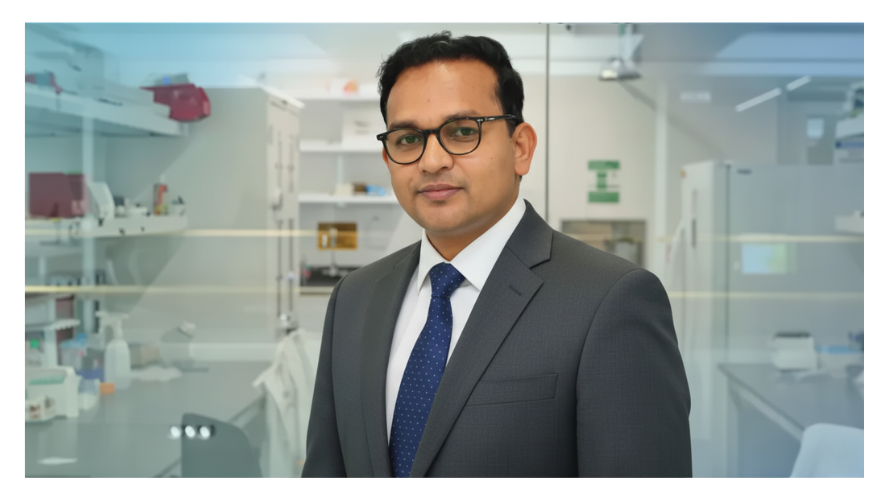
Los Angeles, CA – September 21, 2026 - Dr. Johnson V. John, Assistant Professor at the Terasaki Institute for Biomedical Innovation, has been awarded an NIH R01 grant to lead development of a next-generation, immunomodulatory wound dressing platform designed to accelerate healing in chronic wounds. Dr. John and his research team are tackling a persistent clinical challenge: chronic wounds that resist healing because they become locked in a prolonged inflammatory state.
Chronic wounds, including diabetic, venous, and pressure ulcers, affect an estimated 6.5 million Americans and cost the U.S. healthcare system more than $25 billion each year. Unlike normal wounds, chronic wounds can remain stuck in a prolonged state of inflammation, preventing the body from moving on to the tissue-repair stage of healing. Low oxygen levels in the wound can make this problem worse. Treatments such as hyperbaric oxygen therapy can increase oxygen levels, but they expose the entire body to high concentrations of oxygen and provide limited control over how much oxygen reaches the wound itself.
Chronic wounds can become trapped in a cycle of inflammation because the immune cells at the wound site do not make the normal transition from promoting inflammation to supporting tissue repair,” said Dr. Johnson V. John. “Our platform is designed to help break that cycle by delivering oxygen directly to the wound while using a specialized peptide to encourage immune cells to support healing. The work reflects the Terasaki Institute's broader focus on translational biomaterials and tissue engineering, bringing together expertise in polymer science, immunology, and wound biology within a single platform aimed at clinical application.
"This work reflects exactly the kind of translational, cross-disciplinary science the Terasaki Institute was built to support," said Dr. Xiling Shen, Acting Director, Terasaki Institute for Biomedical Innovation.
If successful, the platform could offer a localized approach to shortening the inflammatory phase of chronic wounds and accelerating tissue regeneration, without the systemic risks associated with current oxygen-based therapies.
The project brings together interdisciplinary expertise in bioengineering, immunology, and materials science from Harvard Medical School and the University of Cincinnati, further reinforcing the Terasaki Institute’s commitment to developing innovative, translational solutions for hard-to-treat clinical conditions.