
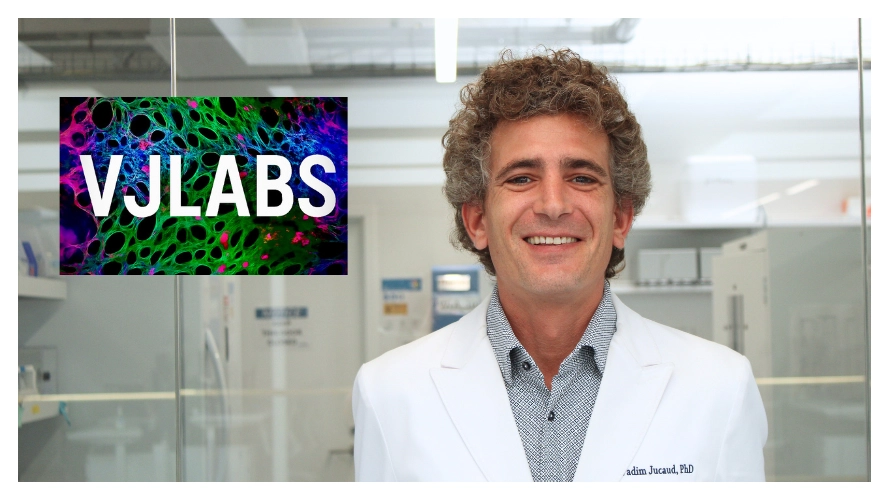
Los Angeles, CA – February 23, 2026 - Dr. Vadim Jucaud, Principal Investigator and Assistant Professor at the Terasaki Institute, with Co-Principal Investigator Angeles Baquerizo, MD, PhD, FACS, FAASLD have been awarded an NIH R21 research grant to develop a first-of-its-kind organ-on-a-chip platform to study immune rejection in pig-to-human liver transplantation. The project tackles one of the most pressing challenges in modern transplantation medicine: advancing xenotransplantation toward safe and effective clinical use.
For patients with end-stage liver disease, transplantation is often the only life-saving option. Yet donor liver shortages leave thousands of patients waiting each year, many of whom will never receive a transplant. While xenotransplantation using pig organs offers promise, its clinical translation remains limited by major unresolved hurdles, most notably an incomplete understanding of the human xenoimmune responses that drive graft injury and rejection.
“Despite major advances in genetic engineering of porcine organs, xenoimmune rejection remains a critical barrier,” said Dr. Jucaud. “We need better tools to understand how human immune systems respond to pig organs, and how those responses can be predicted, controlled, and avoided.”
The NIH-funded project will focus on developing a vascularized porcine liver-on-a-chip, a micro-engineered platform that recreates key structural and functional features of a pig liver, including its blood vessel network. Unlike traditional models, the system allows researchers to introduce human immune components, such as antibodies and immune cells, and observe their interactions with pig liver tissue in real time.
This approach enables the study of both antibody-mediated and cell-mediated immune responses, providing new insight into mechanisms of graft injury and rejection. Capturing these complex interactions in a controlled, human-relevant system may help guide the design of genetically modified pig organs.
Importantly, the porcine liver-on-a-chip platform offers a scalable alternative to animal testing, aligning with emerging regulatory priorities that emphasize advanced in vitro models for biomedical research.
Beyond its scientific impact, this work also carries deep personal significance, as it aligns closely with the continuation of Dr. Paul I. Terasaki’s legacy. A pioneer in transplant immunology, Dr. Terasaki transformed organ matching and survival outcomes worldwide, an enduring vision that continues to guide the Institute’s mission.
By integrating organ-on-a-chip engineering with transplant immunology, the project aims to generate data that support future preclinical studies and bring xenotransplantation closer to the clinic.
The project brings together expertise in bioengineering, immunology, and clinical transplantation, reinforcing the Terasaki Institute’s commitment to moving transformative discoveries from the laboratory to real-world patient care.
A link to Dr. Vadim Jucaud’s lab (VJLabs) page can be found here:
https://terasaki.org/institute/research/investigators/vadim-jucaud-laboratory.html